Source eco friendly bagasse and bamboo paper wine pulp tray for events, catering, and retail
Find 30 verified options for eco friendly bagasse and bamboo paper wine pulp tray designed for sustainable packaging needs. Buyers can compare specifications, customization features, and pricing details across multiple suppliers offering wet and dry pressed pulp molding solutions.
Key considerations
Products List





Comprehensive Sourcing Guide
Strategic Sourcing Guide for Eco-Friendly Bagasse and Bamboo Wine Pulp Trays
The global shift toward sustainable packaging has elevated the demand for eco-friendly alternatives to plastic and Styrofoam, particularly in the beverage industry. For procurement professionals sourcing eco-friendly bagasse and bamboo paper wine pulp trays, the market offers a diverse array of options that blend agricultural waste with advanced molding technologies. This guide provides a disciplined, evidence-based framework for evaluating suppliers, understanding technical specifications, and ensuring compliance with food safety and environmental standards. The focus remains strictly on verified attributes observed in the current market, such as the use of bagasse, bamboo, and recycled pulp, alongside specific processing methods like wet and dry pressing.
Technical Specifications and Material Composition
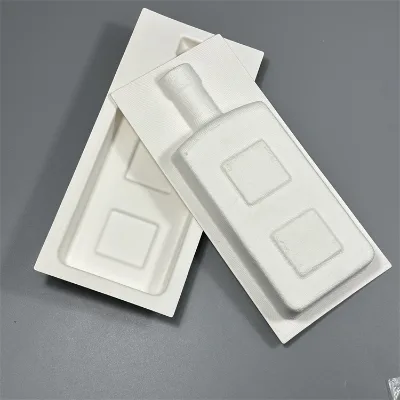
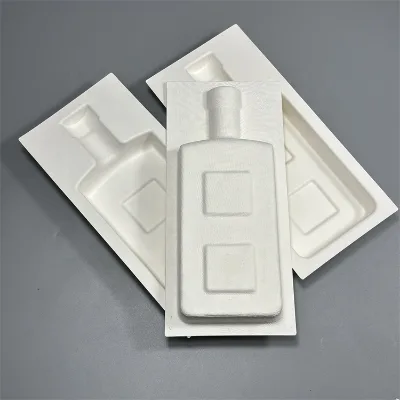
The foundation of a high-quality wine pulp tray lies in its raw material composition and the manufacturing process employed. Based on observed product data, the primary materials utilized include bagasse, bamboo, and recycled paper pulp. These materials are often combined to achieve a balance between structural integrity and biodegradability. The raw materials are processed through specific techniques, most notably wet pressing and dry press pulp molding. Wet pressing is frequently cited as a method that enhances the density and smoothness of the final product, making it suitable for holding heavy glass bottles securely.
A critical technical attribute to verify is the hardness of the tray. Market observations indicate that these products typically range from "medium soft" to firm, depending on the specific pulp density and pressing pressure. The hardness directly impacts the tray's ability to protect wine bottles during transit without cracking under pressure. Furthermore, the bleaching status is a significant differentiator. Many eco-friendly trays are sold in their natural unbleached state to maintain the integrity of the fibers and reduce chemical usage. However, some suppliers offer white or custom-colored options, which may involve additional processing steps. Buyers must clarify whether the "white" appearance is achieved through mechanical refining or chemical bleaching, as this affects the compostability profile.
The physical dimensions of the trays are highly customizable. Specifications such as size and shape are often accepted as OEM (Original Equipment Manufacturer) requests. The compartment structure is another vital technical feature, with options ranging from single compartments to three distinct sections of varying sizes. This flexibility allows for the accommodation of different wine bottle shapes, including standard Bordeaux, Burgundy, and sparkling wine bottles. The single package size for shipping logistics is typically compact, with observed dimensions around 10x20x9 cm for individual units, which optimizes container utilization during international freight.
Compliance, Certification, and Food Safety Standards
For wine packaging, compliance with food safety regulations is non-negotiable. The primary certification observed in the current market for these pulp trays is the FDA (Food and Drug Administration) approval. This certification ensures that the materials used in the tray do not leach harmful substances into the wine or food products it contacts. Procurement teams must request valid, up-to-date FDA documentation from potential suppliers before placing orders. Relying on generic "eco-friendly" claims without specific food-grade certification is a significant risk in the beverage sector.
In addition to food safety, environmental certifications are essential for validating the "eco-friendly" claims. The products are characterized as bio-degradable, compostable, and recyclable. The pulping type is often listed as "recycled pulp," which aligns with circular economy principles. However, buyers should verify the specific standards for compostability, such as ASTM D6400 or EN 13432, even if not explicitly listed in every product description. The presence of these standards confirms that the tray will break down effectively in industrial composting facilities. The "Recyclable Ecofriendly" advantage noted in product listings suggests that the material can be reintegrated into the paper recycling stream, provided it is free from non-paper contaminants like plastic liners or heavy inks.
Cost Drivers and Economic Factors
Understanding the cost structure of bagasse and bamboo pulp trays is crucial for budgeting and negotiation. The observed price range in the market is quite low, typically falling between 0 and 1.3 USD per unit, depending on volume and customization. This affordability is driven by the use of agricultural by-products like bagasse and bamboo, which are generally less expensive than virgin wood pulp. However, the final unit cost is heavily influenced by the complexity of the molding process. Wet pressing, while offering superior smoothness, may incur higher energy and time costs compared to dry pressing.
The Minimum Order Quantity (MOQ) is a significant economic factor. Data indicates a wide range, from 500 units to 100,000 units, with a specific high-confidence observation of an MOQ of 5,000 pieces for certain models. Suppliers often tier their pricing based on these volumes. For smaller buyers, the 500-unit entry point offers a lower barrier to entry, though the per-unit cost may be higher. Conversely, larger orders benefit from economies of scale but require significant upfront capital and storage capacity. Customization costs, such as embossed or debossed logos, and the selection of custom colors, will also add to the base price. Buyers should anticipate that "Customized" specifications, including unique shapes and sizes, will deviate from standard pricing models and may require a separate quote.
Typical Applications and Usage Scenarios
The primary application for these trays is the packaging of wine bottles, as indicated by the product name "Pulp Wet Pressed Wine Paper Tray." The design specifically addresses the need to protect glass bottles from impact and vibration during shipping and storage. The compartment structure, which can range from one to three sections, allows for the secure transport of multiple bottles or mixed assortments. The "Food" usage attribute confirms their suitability for direct contact with consumable goods, reinforcing the need for food-grade materials.
Beyond direct wine packaging, these trays are increasingly used in retail display settings. Their natural, unbleached aesthetic aligns well with the branding of organic and premium wine producers who wish to communicate sustainability to the end consumer. The ability to accept custom logos and designs makes them ideal for branded promotional packaging. The "Disposable" nature of the product suggests they are intended for single-use applications where the tray is discarded after the wine is opened or the product is sold. However, the "Recyclable" and "Compostable" attributes offer an end-of-life solution that reduces landfill waste, a key selling point for environmentally conscious retailers.
Supplier Evaluation and Origin Verification
When evaluating suppliers, the place of origin is a critical data point. The majority of the observed products originate from China, specifically the Guangdong province. This region is a hub for pulp molding manufacturing, offering a mature supply chain for bagasse and bamboo processing. Buyers should verify the specific factory location to assess logistics costs and lead times. The "Custom Order: Accept" attribute indicates that suppliers are generally flexible, but the lead time for custom molds can vary significantly.
Supplier reliability can be gauged by their ability to provide detailed technical data. A trustworthy supplier will clearly distinguish between "Wet Press" and "Dry Press" techniques and provide evidence of their FDA certification. The "Brand Name" of the supplier, such as "BonitoPak," should be verified for market reputation and consistency. Buyers should also examine the packing specifications, such as "50PCS in a Poly Bag and 5000PCS in a Carton," to ensure that the packaging protects the trays during transit. The use of PE dust bags and carton packaging is standard, but the quality of these secondary packaging materials should be confirmed to prevent damage to the fragile pulp trays.
Quality Control and Long-Term Procurement Considerations
Quality control for pulp trays involves rigorous testing of structural integrity and surface finish. Buyers should verify the "Hardness" and "Single gross weight" of the product to ensure consistency across batches. The observed single gross weight of 0.026 kg serves as a baseline for weight-based quality checks. Any significant deviation could indicate issues with pulp density or moisture content. The "Logo printing" method, whether embossed or debossed, should be inspected for clarity and depth to ensure brand visibility without compromising the tray's structural strength.
For long-term procurement, sustainability is a key consideration. The use of "Recycled Pulp" and "Bagasse" ensures a lower carbon footprint compared to virgin materials. However, buyers must ensure that the supply chain remains consistent in its sourcing of raw materials. Fluctuations in the availability of bagasse or bamboo could impact production schedules. Additionally, the "Customization" aspect allows for brand evolution, but frequent changes in design can increase costs and lead times. Establishing a long-term partnership with a supplier who offers stable pricing and consistent quality is essential for maintaining a reliable supply chain.
Comparative Analysis of Product Attributes
To assist in decision-making, the following table summarizes the key attributes observed in the market for eco-friendly bagasse and bamboo wine pulp trays. This comparison highlights the variability in specifications and helps buyers identify the features most relevant to their specific needs.
| Attribute Category | Observed Options | Key Verification Points |
|---|---|---|
| Raw Materials | Bagasse, Bamboo, Recycled Paper Pulp | Verify source of bagasse/bamboo; check for virgin pulp content. |
| Processing Technique | Wet Press, Dry Press Pulp Molding | Confirm technique impacts smoothness and density. |
| Certification | FDA | Request current FDA documentation for food contact. |
| Biodegradability | Bio-Degradable, Compostable, Recyclable | Check for specific compostability standards (e.g., ASTM). |
| Customization | Logo (Embossed/Debossed), Color, Size | Confirm lead times for custom molds and color matching. |
| MOQ | 500 to 100,000 pcs (Common: 5,000) | Negotiate based on volume tiers and storage capacity. |
| Origin | China (Guangdong) | Assess logistics costs and lead times from specific ports. |
| Physical Properties | Medium Soft Hardness, Unbleached/White | Test for structural integrity and moisture resistance. |
By adhering to these evidence-based guidelines, procurement professionals can navigate the complex landscape of eco-friendly wine packaging. The focus on verified attributes, such as FDA certification, specific raw materials, and processing techniques, ensures that the selected suppliers meet both functional and sustainability requirements. This disciplined approach minimizes risk and supports the strategic goals of building a resilient, environmentally responsible supply chain.
FAQs
What materials are used to make these wine pulp trays?
These trays are primarily made from bagasse, bamboo, and recycled paper pulp. The specific combination depends on the model, with some using wet pressing to enhance density while others utilize dry press techniques for structural integrity.
Can I get custom logos printed on the trays?
Yes, logo printing is available with options for embossed or debossed designs. Suppliers accept custom orders for specific shapes and sizes, allowing you to brand the packaging to match your wine bottle aesthetics.
Are these trays safe for direct food contact?
Yes, the trays are certified FDA compliant for food contact applications. This ensures that the materials do not leach harmful substances into the wine, making them suitable for direct packaging of consumable goods.
What is the minimum order quantity for these products?
The minimum order quantity typically ranges from 500 to 100,000 pieces, with a common baseline of 5,000 pieces for standard models. Buyers should verify specific MOQs as they vary by supplier and customization level.
How are the trays packaged for shipping?
Trays are usually packed 50 pieces in a poly bag and 5,000 pieces in a carton. Some models also utilize PE dust bags and carton packaging to protect the fragile pulp structure during international transit.
Which processing techniques are used for these trays?
The trays are manufactured using either wet pressing or dry press pulp molding techniques. Wet pressing often yields a smoother surface and higher density, while dry press is used for specific structural requirements.
Where are these eco-friendly trays manufactured?
The majority of these products originate from Guangdong, China, a major hub for pulp molding manufacturing. Buyers should verify the specific factory location to assess logistics costs and lead times accurately.